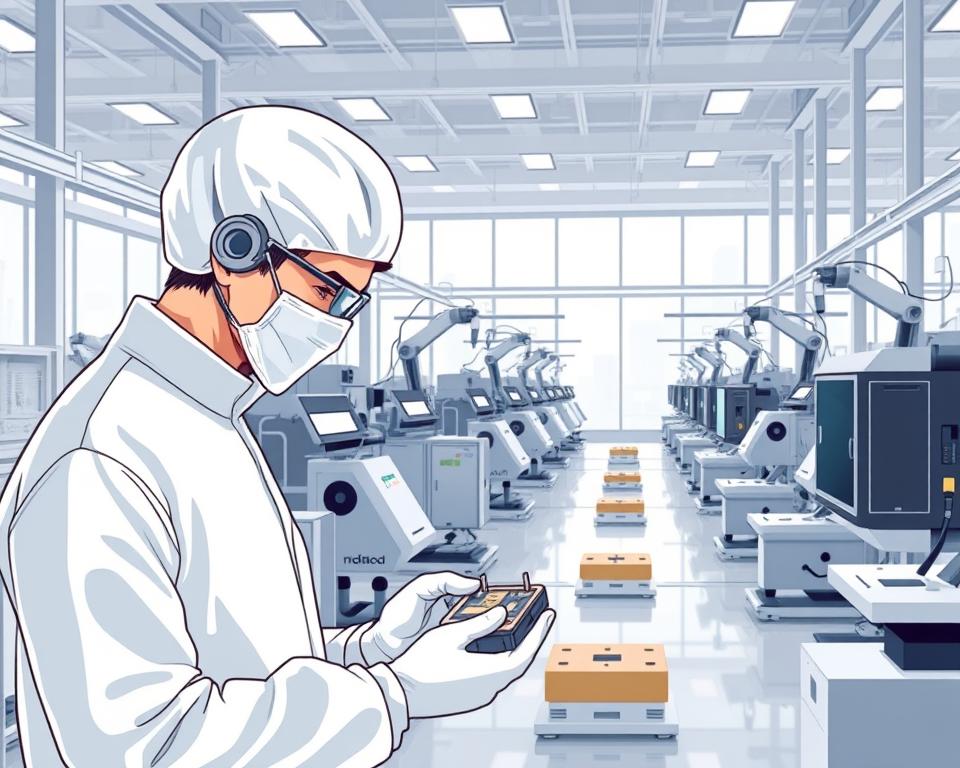
Were you aware the Dallas-Fort Worth metroplex is home to some of the nation’s most established precision manufacturing hubs? For over 40+ years, local experts have been consistently fabricating the essential components that power industries from nationwide.
This process is the foundation of modern industry. It transforms raw materials into detailed, high-quality parts with remarkable accuracy. For businesses in Texas and beyond, accessing this level of industrial machine repair Dallas skill is a powerful competitive advantage.
Nearby shops offer a full spectrum of fabrication services. This includes everything from basic turning to advanced multi-axis machining. They work with a wide range of materials like aluminum and stainless steel to meet diverse project needs.
These facilities serve vital sectors including aerospace, medical, and energy. Their commitment to quality ensures parts are made to exact specifications, holding very tight tolerances. Whether you need a one prototype or a large production run, they have the capacity.
Many providers also add value with finishing work, assembly, and logistics support. This turn-key approach makes the entire supply chain easier for you. Leaders like Halsey Manufacturing bring budget-friendly solutions, while FTC Industries in Arlington builds custom parts shipped across the country.
Ready to kick off your project? The first step is a direct chat with a regional expert. Get a detailed quote today and discover how this specialized fabrication service can make your designs a reality.

Understanding CNC Lathe Machining
At the heart of modern manufacturing lies a process where digital designs become physical reality with exceptional consistency. This computer-controlled method shapes raw materials into precise components through automated cutting operations.
Specialists like Halsey Manufacturing employ this technology for value-focused solutions. FTC Industries focuses on highly detailed components with exact specifications using advanced systems.
Understanding The Core Process
The core operation involves cutting tools that rotate removing material from a workpiece. This creates cylindrical components with excellent accuracy. A computer numerical control system automates the entire sequence.
Key elements include the spindle, chuck system, and tooling turret. These work together under programmed instructions. The system converts digital blueprints into machine commands.
Programming dictates tool paths, speeds, and depth of cuts. This ensures every operation follows the exact design. The result is reliable output across multiple units.
Material versatility is another important benefit. Systems handle everything from engineering plastics to hardened steels. High-performance alloys present minimal challenge for modern equipment.
Why It Beats Manual Machining
Automated systems offer major benefits compared to manual operations. Consistency and repeatability increase significantly. Human error becomes much less likely.
Production times decrease significantly with automated equipment. Labor costs often decrease as one operator can manage multiple machines. The ability to maintain tight specifications remains constant.
Complex geometries become achievable with computer guidance. Contours, tapers, and threads are produced efficiently. Manual methods struggle with these detailed shapes.
| Aspect | Computer-Controlled Fabrication | Manual Operation |
|---|---|---|
| Consistency | Strong repeatability across all units | Varies with operator skill |
| Production Speed | Shorter cycle times | Slower, based on operator |
| Tolerance Control | Holds tolerances within thousandths of an inch | Less precise with more variation |
| Complex Geometries | Creates contours and tapers with ease | Restricted to simpler shapes |
| Changeover Time | Quick software adjustments | Requires hands-on setup changes |
| Safety | Operators monitor from safe distance | Closer contact with moving parts |
Precision advantages are particularly significant. Systems maintain tolerances within thousandths of an inch. This level of accuracy continues through complete runs.
Programming flexibility allows fast changeovers between different components. This makes the technology ideal for both prototyping and large-scale production. Setup adjustments happen through software rather than physical tooling.
Safety improvements represent another key benefit. Operators monitor processes rather than manually controlling cutting actions. This reduces workplace accidents substantially.
Moving from manual to automated fabrication is more than a tech upgrade—it changes how industries handle production, quality control, and workplace safety.
Economic considerations also favor automated approaches. While initial investment may be higher, long-term savings on labor and material waste justify the cost. Quality improvements reduce rejection rates and rework expenses.
Why Work With A Dallas-Based CNC Shop
In today’s competitive landscape, having a manufacturing ally just down the road provides real advantages in communication, flexibility, and cost control. Regional production partners like those in the Metroplex offer more than just proximity—they deliver a collaborative approach that distant suppliers cannot match.
This partnership model transforms traditional vendor relationships. It builds shared success through mutual understanding and rapid response capabilities.
Local Expertise And Fast Response
Established providers bring decades of regional knowledge to your project. Continental Manufacturing, operating since 1954, possesses deep insight into Texas industry standards. This experience translates to smarter solutions for your specific application requirements.
Personalized attention becomes standard with nearby facilities. You gain direct access to engineers and technicians throughout the production cycle. This close collaboration ensures your vision is correctly translated into finished components.
Key benefits of working locally include:
- Faster consultation and review times with face-to-face meetings
- Understanding of regional material preferences and industry needs
- Adaptability for urgent requests and last-minute design updates
- Community accountability through long-term reputation building
Halsey Manufacturing exemplifies this approach as “Your Local CNC Machine Shop”. They combine fair pricing with excellent quality through personalized service. FTC Industries in Arlington offers similar advantages with convenient access to multiple shipping routes.
Supply Chain And Delivery Advantages
Geographic proximity streamlines your entire production workflow. Reduced shipping distances mean lower transportation costs and faster delivery times. This efficiency benefits both prototyping and larger production runs.
Dallas’s central Texas position offers exceptional transportation infrastructure. Major highways, rail networks, and airports facilitate smooth material receipt and finished parts shipment. This connectivity minimizes delays throughout your supply chain.
| Consideration | Local Production Partner | Distant Supplier |
|---|---|---|
| Communication Response | Hours, often same-day | Days, across time zones |
| Shipping Costs | Minimal, often local rates | Significant, with fuel surcharges |
| Delivery Time | 1-2 days typically | Commonly 1-2 weeks |
| Quality Issue Resolution | Immediate facility visit can be arranged | Long email and phone chains |
| Relationship Building | Continuous, collaborative | Transactional, project-based |
| Economic Impact | Benefits the local community | Funds move out of the region |
The economic benefits extend beyond individual projects. Supporting local businesses keeps valuable capabilities within the community. It fosters job creation and strengthens the regional industrial ecosystem.
“Manufacturing locally isn’t only about geography—it’s about building resilient supply chains where communication happens in minutes, not days, and accountability is personal rather than corporate.”
When you request a quote today from a nearby specialist, you’re investing in more than just parts. You’re securing a partnership that understands Texas’s unique challenges and opportunities. This local expertise combined with logistical advantages creates a powerful foundation for project success.
Advanced CNC Machining Capabilities
Leading-edge production technology merges rotational and linear movements to craft intricate geometries from solid blocks. Today’s most sophisticated systems perform complete fabrication in a single setup. This eliminates multiple handling steps that can introduce errors.
Regional specialists like FTC Industries utilize state-of-the-art equipment for exceptional accuracy. Halsey Manufacturing implements multi-axis solutions for tight tolerance work. Continental Manufacturing offers a comprehensive suite of advanced production services.
Precision CNC Turning Services
Rotational fabrication creates cylindrical components with exceptional accuracy. Standard two-axis operations produce standard shafts and bushings efficiently. More advanced configurations add significant versatility.
Live tooling stations enable milling and drilling on turned parts. This happens without removing the workpiece. Secondary spindle capabilities allow complete machining of both part ends.
Swiss-style equipment provides superior support for long, slender components. These systems guide material through a bushing near the cutting zone. This minimizes deflection during operations.
Vertical turning lathes handle large diameter parts effectively. They’re ideal for components like flanges and rings. The vertical orientation improves chip evacuation.
Multi-Axis CNC Milling Capabilities
Linear cutting operations evolve dramatically with additional movement axes. Three-axis systems work on part tops and sides effectively. They’re excellent for prismatic components and mold cavities.
Four-axis equipment adds rotational movement around one horizontal line. This enables continuous machining on cylindrical surfaces. Complex contours and helical features become achievable.
Five-axis platforms represent the pinnacle of milling technology. They manipulate tools or workpieces along five simultaneous paths. This allows machining of compound angles and organic shapes.
Sophisticated software calculates optimal tool engagement strategies. It maintains stability while removing challenging geometries. Material removal rates balance with precision requirements.
Complex Multi-Axis Machining
Integrated systems combine turning and milling in single platforms. These turn-mill centers handle complete part fabrication without transfers. This approach significantly improves dimensional relationships between features.
Complete machining in one setup reduces cumulative positioning errors. Critical relationships between turned diameters and milled pockets remain exact. This is vital for assemblies with tight fit requirements.
Advanced programming expertise drives these complex operations. Technicians use sophisticated CAM software for optimal tool paths. They create efficient sequences that minimize non-cutting time.
Equipment capabilities include automated tool changers with extensive libraries. Probe systems verify workpiece positions automatically. Pallet changers keep machines running during part loading.
| Capability Type | Primary Movements | Typical Applications | Tolerance Range | Setup Advantages |
|---|---|---|---|---|
| 2-Axis Turning | Rotational + Linear | Shafts, pins, bushings | ±0.001″ | Simple, fast changeover |
| 3-Axis Milling | X, Y, Z Linear | Prismatic parts, molds | ±0.0005″ | Good for flat surfaces |
| 4-Axis Milling | 3 Linear + 1 Rotational | Cams, helical gears | ±0.0003″ | Continuous cylindrical work |
| 5-Axis Milling | 3 Linear + 2 Rotational | Aerospace blades, implants | ±0.0002″ | Complex compound angles |
| Turn-Mill Center | Turning + 3+ Axis Milling | Complete complex parts | ±0.0002″ | Single setup completion |
| Swiss-Style | Turning + Live Tools | Medical screws, connectors | ±0.0001″ | Excellent for long parts |
Applications for these advanced capabilities span critical industries. Aerospace components demand complex contours and tight weight control. Medical implants require biocompatible materials and microscopic features.
Industrial equipment needs robust parts with precise sealing surfaces. Each application benefits from reduced handling between operations. Complete fabrication in one clamping ensures optimal results.
Regional providers continuously invest in next-generation equipment. This maintains competitive advantage in evolving markets. It ensures capacity for tomorrow’s design challenges.
“The real measure of manufacturing progress isn’t the number of axes, but how smoothly those movements integrate to produce complete, precision components in single, efficient setups.”
Tooling strategies prioritize stability during material removal. Progressive roughing operations leave adequate stock for finishing passes. This maintains part integrity throughout the process.
Automated measurement systems verify critical dimensions in-process. This immediate feedback allows adjustments before completing operations. It ensures consistent quality across production runs.
Materials Expertise For Your Project
Material science expertise transforms engineering concepts into durable, functional parts that withstand real-world demands. The right stock selection affects performance, cost, and manufacturability.
Local specialists like FTC Industries and Continental Manufacturing bring decades of material knowledge. They guide clients through complex choices between aluminum, steel, and exotic options.
This guidance considers strength requirements, environmental exposure, and budget constraints. The right material balances all project factors for successful outcomes.
Aluminum And Stainless Steel Machining
Aluminum alloys offer excellent strength-to-weight ratios for many applications. Common grades include 6061-T6 for general use and 7075 for aerospace needs.
Specialized tooling strategies prevent built-up edge on aluminum surfaces. High-speed spindle operations achieve superior finishes with minimal burring.
Stainless steel presents different challenges with its tendency to work-harden. Grades like 303 offer better machinability, while 316 delivers superior corrosion resistance.
Techniques manage heat generation during stainless operations. Controlled feed rates and sharp tooling maintain dimensional stability throughout production.
Exotic Alloys And High-Performance Metals
Titanium demands specialized approaches due to its low thermal conductivity. Tooling must withstand high cutting pressures while managing heat effectively.
Nickel-based superalloys like Inconel require even more careful planning. These materials maintain strength at extreme temperatures but challenge fabrication processes.
Monel and other copper-nickel alloys need specific speed and feed combinations. Their gummy chip formation requires optimized tool geometries for clean cutting.
Cooling strategies vary dramatically across these exotic materials. High-pressure systems direct coolant precisely to the cutting interface.
Machining Plastics And Composites
Engineering plastics like PEEK and Ultem serve medical and aerospace industries. Their fabrication requires preventing melting or chipping during operations.
Delrin (acetal) offers dimensional stability but needs sharp tooling. Specialized cutters produce clean edges without deforming the material.
Composite materials combine fibers with resin matrices. Diamond-coated tools provide the durability needed for abrasive carbon fiber layers.
Fixturing approaches consider material flexibility and thermal expansion. Non-marring clamps protect surfaces while providing adequate holding force.
| Material Category | Key Challenges | Tooling Solutions | Cooling Approach | Surface Finish Capability |
|---|---|---|---|---|
| Aluminum Alloys | Built-up edge, chip evacuation | High-positive rake, polished flutes | Mist or air blast | Ra 8-16 µin (mirror possible) |
| Stainless Steels | Work hardening, heat generation | Carbide inserts, sharp edges | Flood coolant | Ra 16-32 µin (medical grade) |
| Titanium | Low conductivity, galling | Premium carbide, reduced contact | High-pressure through-tool | Ra 32-63 µin |
| Inconel/Monel | Extreme strength, abrasive | Cermet or ceramic inserts | Copious flood with additives | Ra 63-125 µin |
| Engineering Plastics | Melting, chipping, deformation | Single-flute, sharp geometry | Dry or minimal air | Ra 16-32 µin (clean edges) |
| Composites | Abrasion, delamination | Diamond-coated, polycrystalline | Vacuum extraction | Ra 32-125 µin (fiber dependent) |
Surface finish requirements guide final operation selections. Aluminum achieves mirror finishes with proper tool paths and spindle speeds.
Medical-grade stainless needs specific Ra values for cleanability. Measurement equipment verifies these parameters meet industry standards.
Testing protocols ensure material properties match specifications. Hardness verification confirms heat treatment effectiveness.
Certification documentation provides traceability from raw stock to finished components. This is critical for regulated industries like aerospace and medical.
“The most sophisticated fabrication equipment cannot compensate for poor material selection. True expertise lies in matching stock properties to application demands while optimizing for manufacturability.”
Tooling considerations evolve with material advancements. Carbide remains standard for steels while specialized coatings extend tool life.
Non-ferrous materials benefit from diamond-like carbon coatings. These reduce friction and prevent material adhesion during cutting operations.
Fixture design accommodates material-specific behaviors. Rigid setups prevent distortion in thin-walled aluminum components.
Thermal management fixtures address expansion in plastics. These specialized approaches ensure consistent dimensions across production runs.
Local providers like Halsey Manufacturing offer comprehensive material guidance. They help clients navigate trade-offs between performance and cost.
Continental Manufacturing’s long experience with carbon steels informs their alloy recommendations. This knowledge comes from serving Texas industries for decades.
FTC Industries specializes in challenging exotic materials. Their expertise ensures successful outcomes for demanding applications.
This collective knowledge represents a valuable resource for any fabrication project. It transforms material selection from a guessing game into a strategic advantage.
Industries We Serve In Dallas And Beyond
From aerospace components flying at 30,000 feet to medical implants sustaining human life, production partners tackle critical applications daily. Regional specialists like FTC Industries, Continental Manufacturing, and Halsey Manufacturing have cultivated deep sector-specific knowledge.
This expertise allows them to meet unique regulatory and performance demands across diverse fields. Each industry presents distinct challenges that require tailored approaches and solutions.
Providers develop comprehensive understanding of sector-specific requirements. They maintain necessary certifications and implement appropriate quality systems. This ensures components perform reliably in their intended environments.
Aerospace And Aviation Machining
Flight-critical components demand exceptional reliability and documentation. Engine parts, structural elements, and landing gear components must meet FAA regulations.
Strict certification processes govern every production step. Materials like titanium and high-strength aluminum alloys are common. These lightweight yet durable metals improve fuel efficiency.
Providers maintain detailed traceability for all materials. Each batch receives certification documenting its origin and properties. This supports rigorous safety standards throughout the aviation industry.
Fatigue testing validates component longevity under cyclic loads. Non-destructive examination methods detect potential flaws. These processes ensure airworthiness for decades of service.
Medical Device Production
Surgical instruments and implantable devices require biocompatible materials. Stainless steel grades like 316LVM offer excellent corrosion resistance. Titanium alloys provide strength with biological compatibility.
Cleanroom options prevent contamination during fabrication. Controlled environments maintain particulate levels below strict thresholds. This is essential for devices that contact human tissue.
FDA requirements govern design controls and production processes. Documentation demonstrates compliance with quality system regulations. Sterilization validation ensures devices are safe for clinical use.
Surface finish specifications promote cleanability and tissue integration. Microscopic features must meet exact dimensional requirements. These tight tolerances support proper device function.
Oil & Gas And Industrial Machinery
Downhole tools operate in extreme pressure and temperature conditions. Valve components control corrosive and abrasive fluid flows. Drilling equipment withstands tremendous mechanical stresses.
Materials selection considers hydrogen sulfide exposure and saltwater corrosion. Special alloys resist degradation in harsh environments. Protective coatings extend service life in challenging applications.
Pressure testing validates sealing capabilities and structural integrity. Components undergo simulation of actual operating conditions. This verification prevents failures during critical operations.
Continental Manufacturing brings decades of oil field experience. Their knowledge of directional drilling equipment is particularly valuable. FTC Industries serves this sector with specialized capabilities.
Military And Defense Contracting
ITAR compliance controls access to sensitive technical data. Facilities implement physical and cybersecurity measures. These protect national security interests throughout production.
Military specifications define exact material and performance requirements. Testing protocols validate components under simulated combat conditions. Environmental testing includes temperature extremes and vibration.
Documentation provides complete audit trails for accountability. Lot control tracks materials from receipt through final assembly. This supports mission-critical reliability for defense systems.
Rigorous inspection processes verify dimensional accuracy. Non-conforming materials receive immediate segregation and analysis. Continuous improvement addresses any process deviations.
Commercial applications span automotive components to consumer products. Industrial machinery parts support manufacturing operations worldwide. Production volumes range from prototypes to high-quantity runs.
| Industry Sector | Key Regulatory Bodies | Primary Materials | Critical Testing Methods | Documentation Requirements |
|---|---|---|---|---|
| Aerospace & Aviation | FAA, EASA, AS9100 | Titanium, Aluminum, Inconel | Fatigue, NDT, Stress Rupture | Material Certs, First Article, Process Records |
| Medical Devices | FDA, ISO 13485 | 316L Stainless, Titanium, PEEK | Biocompatibility, Sterilization, Dimensional | DHF, DMR, Validation Protocols |
| Oil & Gas | API, ASME, NACE | Alloy Steels, Monel, Duplex Stainless | Pressure, Corrosion, Mechanical | Material Traceability, MTRs, Test Reports |
| Military/Defense | ITAR, DFARS, MIL-SPEC | High-Strength Steels, Composites | Environmental, Ballistic, EMI | DDTC Registrations, CUI Controls |
| Commercial/Industrial | ISO 9001, Customer Specs | Carbon Steels, Plastics, Brass | Functional, Fitment, Durability | Inspection Reports, Certificates of Conformance |
Design collaboration begins during development phases. Engineers provide manufacturability feedback on initial concepts. This partnership optimizes components for efficient production.
Value engineering identifies potential cost reductions without sacrificing performance. Alternative materials or processes may offer advantages. Early involvement maximizes these opportunities.
“Working across industries requires more than versatile equipment—it calls for understanding each sector’s priorities and risk tolerances. The best providers speak fluently across all these domains.”
Quality management systems adapt to evolving standards. Regular audits ensure continued compliance with current requirements. Training keeps personnel current on sector-specific developments.
Investment in advanced inspection equipment supports stringent verification needs. Coordinate measuring machines capture complete dimensional data. Surface analyzers quantify finish characteristics precisely.
Halsey Manufacturing works with Texas clients across these diverse sectors. Their flexibility addresses varying volume and complexity needs. This broad experience informs every project approach.
Continuous improvement processes incorporate lessons from all served industries. Best practices transfer between sectors when applicable. This cross-pollination drives innovation across the entire operation.
Our Commitment To Quality And Precision
The difference between quality parts and truly exceptional parts is measured in tiny fractions of an inch and validated through systematic scrutiny. This dedication defines our approach to every project that enters our facility.
We build reliability into components from the first design review through final shipment. Our systems ensure consistent excellence across all production runs.
Holding Extremely Tight Tolerances
Maintaining dimensional accuracy within ±0.0005 inches requires more than capable equipment. It demands skilled programming and meticulous process control. Every variable must be managed precisely.
Advanced computer-controlled systems provide the foundation for this work. Programmers optimize tool paths to minimize deflection and thermal effects. Material behavior is anticipated and compensated for during operations.
FTC Industries applies statistical process controls to achieve the tightest specifications with minimal scrap. Their ISO 9000 compliance framework supports this disciplined approach. Halsey Manufacturing maintains close tolerances across milling, turning, and laser operations through rigorous methodology.
Continental Manufacturing offers exacting work for both standard and custom products. Their decades of experience inform their tolerance strategies.
Strict Quality Control Processes
Multiple verification stages create a comprehensive safety net for component integrity. First-article inspection validates that initial production matches all design requirements perfectly.
In-process checks monitor critical dimensions during fabrication. This early detection prevents errors from propagating through subsequent operations. Final inspection provides one last comprehensive review before shipment.
Our quality systems include:
- Written procedures for every inspection activity
- Clear acceptance criteria matched to customer specifications
- Trained personnel empowered to stop non-conforming production
- End-to-end traceability from raw material to finished part
Statistical Process Control monitors fabrication operations continuously. Control charts track variation patterns and detect trends before they result in unacceptable parts. This proactive approach reduces waste and improves consistency.
Advanced Inspection And Validation
Modern measurement technology provides the objective data needed for confident decisions. Coordinate Measuring Machines capture complete dimensional data with micron-level accuracy.
These systems verify complex geometries that traditional tools cannot assess properly. Optical comparators magnify profiles for detailed visual inspection. Surface roughness testers quantify finish characteristics to precise Ra values.
Laser scanners create detailed digital models for comparison against CAD data. This non-contact method is ideal for delicate or soft materials.
| Inspection Equipment | Measurement Capability | Typical Applications | Accuracy Range |
|---|---|---|---|
| Coordinate Measuring Machine (CMM) | 3D dimensional analysis | Complex contours, positional tolerances | ±0.0001″ to ±0.0004″ |
| Optical Comparator | Profile and contour verification | Gear teeth, thread forms, edge breaks | ±0.0001″ |
| Surface Roughness Tester | Finish texture measurement | Sealing surfaces, bearing journals | Ra 0.8 µin to 800 µin |
| Laser Scanner | Non-contact 3D capture | Delicate parts, reverse engineering | ±0.0005″ to ±0.002″ |
| Hardness Tester | Material property verification | Heat-treated components, wear surfaces | ±1 Rockwell point |
Calibration programs ensure measurement accuracy is maintained. All inspection equipment undergoes regular verification against certified standards. Documentation provides evidence of this traceability to national measurement institutes.
Certification compliance demonstrates our commitment to industry standards. ISO 9001 forms our foundational quality management system. AS9100 certification addresses aerospace sector requirements specifically.
“Quality isn’t achieved by inspection alone—it’s engineered into processes, reinforced by culture, and maintained through vigilance at every production stage.”
Corrective action processes address any quality issues systematically. Root cause analysis identifies underlying factors rather than just symptoms. Preventive measures are implemented to avoid recurrence.
Documentation practices provide full transparency. Inspection reports detail all verification results. Material certifications confirm alloy composition and mechanical properties.
Process records document every production step for complete traceability. This documentation supports regulatory requirements and customer confidence.
Continuous improvement focuses on reducing variation and enhancing performance. Cross-functional teams analyze processes for optimization opportunities. Lessons learned from one project benefit all subsequent work.
Training investment maintains high standards across our organization. Quality personnel stay current with evolving best practices and technologies. Fabrication technicians receive ongoing education on precision techniques.
This comprehensive approach transforms quality from a department function into an organizational culture. Every team member understands their role in delivering exceptional components.
From Prototype To Full Production Runs
Navigating the journey from initial concept to market-ready product requires a manufacturing partner skilled at every volume stage. Regional specialists like FTC Industries offer flexible services spanning this entire spectrum. They combine design for manufacturability expertise with scalable production capacity.
Halsey Manufacturing handles both prototype development and finished product manufacturing seamlessly. Continental Manufacturing accommodates small and large volume runs while maintaining tight tolerance work. This comprehensive approach ensures your vision evolves smoothly from idea to inventory.
Prototyping And Design For Manufacturability
Initial prototypes allow for design validation and functional testing before committing resources. This phase identifies potential issues early when changes are least expensive. Physical models reveal aspects that digital simulations might miss.
Design for manufacturability consultations optimize your concepts for cost, quality, and efficiency. Local experts provide feedback on material selection and feature complexity. They suggest modifications that reduce production times without compromising performance.
FTC Industries brings particular strength to this collaborative design phase. Their engineers work alongside your team to refine component geometry. This partnership often yields substantial savings in both tooling and per-part costs.
Prototyping services extend beyond simple proof-of-concept models. Functional prototypes undergo real-world testing under expected operating conditions. This verification builds confidence before scaling up to larger quantities.
Low-Volume And Bridge Production
Limited quantity runs serve market testing, initial launches, or products with seasonal demand. These smaller batches provide market feedback without excessive inventory risk. They’re ideal for niche applications or specialized industrial equipment.
Bridge production fills gaps between prototyping and full-scale manufacturing. It maintains supply while longer-term tooling or processes are developed. This approach keeps products available during transition periods.
Continental Manufacturing excels at these intermediate volume levels. Their flexible setup allows economical runs of several hundred to a few thousand pieces. They maintain consistent quality across these limited production cycles.
Material considerations remain crucial even at lower volumes. The same attention to steel, aluminum, and exotic alloys applies throughout. Surface finish and tolerance requirements receive identical scrutiny regardless of quantity.
High-Volume And Just-In-Time Manufacturing
Mass production capabilities employ optimized processes and dedicated tooling for cost efficiency. Production line approaches streamline operations for maximum output. These systems achieve economies of scale that benefit both manufacturer and client.
Just-in-time systems synchronize fabrication with customer demand patterns. This methodology reduces inventory costs and improves cash flow throughout the supply chain. Components arrive precisely when needed for assembly or distribution.
Halsey Manufacturing implements sophisticated production planning for these volume scenarios. Their experts help determine optimal batch sizes and inventory levels. This strategic approach minimizes waste while ensuring availability.
Scalability processes enable smooth transitions from prototype to production volumes. Quality and delivery commitments remain unchanged throughout this expansion. Monitoring systems track progress and identify potential bottlenecks proactively.
| Production Phase | Typical Quantity | Primary Objectives | Key Advantages | Lead Time Considerations |
|---|---|---|---|---|
| Prototyping | 1-50 units | Design validation, functional testing | Risk reduction, early issue detection | Weeks to months (design dependent) |
| Low-Volume | 50-1,000 units | Market testing, limited distribution | Flexibility, minimal inventory risk | 2-6 weeks typically |
| Bridge Production | 100-5,000 units | Supply continuity, process development | Market presence during transitions | 4-8 weeks (tooling dependent) |
| High-Volume | 5,000+ units | Cost optimization, market saturation | Economies of scale, dedicated processes | 8-16 weeks (line setup included) |
| Just-In-Time | Ongoing replenishment | Inventory minimization, demand matching | Reduced carrying costs, cash flow improvement | 1-4 weeks (system dependent) |
Production monitoring provides real-time visibility into fabrication progress. Digital tracking systems update status automatically throughout the workflow. This transparency ensures on-time delivery regardless of volume requirements.
Flexibility represents a key advantage of working with regional specialists. They adjust production volumes based on changing market conditions or customer needs. This responsiveness protects against both shortages and excess inventory.
The ability to scale efficiently separates successful launches from stalled initiatives. Proper planning considers not just initial demand but growth potential and seasonal variations. Strategic partnerships address all these factors comprehensively.
“Volume flexibility isn’t about having equipment that can make one part or one million—it’s about having processes, people, and planning systems that maintain quality, cost-effectiveness, and reliability at every point along that spectrum.”
Capacity planning expertise helps clients anticipate future requirements accurately. Analysis of historical data and market trends informs these projections. This forward-looking approach prevents both undercapacity and overinvestment.
Transition management ensures quality consistency when moving between production stages. Process documentation and operator training maintain standards throughout volume changes. This discipline preserves the integrity of your components across the entire lifecycle.
Local providers like those in the Metroplex region offer this full-spectrum capability. Their experience across diverse industries informs best practices for volume scaling. This knowledge benefits every project regardless of its current phase.
Our Facilities And Equipment
Modern fabrication capabilities are built upon a triad of advanced machinery, expansive workspace, and intelligent software systems. This infrastructure transforms engineering concepts into physical reality with remarkable efficiency.
FTC Industries operates a 43,000 square foot production center housing the latest equipment. Continental Manufacturing utilizes cutting-edge SolidWorks and Mastercam platforms for design work. Halsey Manufacturing continuously adopts technological advancements that enhance quality while reducing expenses.
These investments create environments where complex projects thrive. The synergy between physical assets and digital tools drives consistent results.
State-Of-The-Art CNC Lathes And Mills
Rotational centers with live tooling perform milling and drilling operations during turning cycles. This eliminates secondary handling for many components. Y-axis capabilities expand contouring possibilities beyond traditional cylindrical work.
Subspindle configurations allow complete processing of both part ends in one setup. This maintains critical dimensional relationships between features. Complex geometries become achievable without multiple machine transfers.
Five-axis milling platforms manipulate tools along multiple simultaneous paths. They create compound angles and organic shapes with exceptional accuracy. Horizontal centers with pallet changers maximize spindle utilization through automated workpiece handling.
High-speed spindles achieve superior surface finishes on aluminum and other materials. Rapid traverse rates minimize non-cutting time between operations. These systems balance velocity with precision for optimal results.
Tool management includes extensive libraries with quick-change capabilities. Automatic tool measurement compensates for wear during extended production runs. This ensures consistent dimensions across thousands of components.
High-Capacity And Large-Envelope Machines
Heavy-duty platforms handle workpieces weighing several tons without sacrificing accuracy. Robust construction dampens vibration during material removal. This stability is essential for maintaining tight specifications on substantial components.
Extended bed lengths accommodate parts measuring several feet. Oversize spindle bores process large diameter stock efficiently. These expanded envelopes open possibilities for industrial equipment and structural applications.
Custom fixturing solutions secure unusual shapes during operations. Modular workholding systems adapt quickly to different part configurations. Vacuum chucks provide non-marring retention for delicate surfaces.
Auxiliary systems support these substantial platforms. High-pressure coolant delivery manages heat in deep cavities. Chip conveyors automatically remove waste material from the work area.
Climate control maintains stable temperatures throughout expansive facilities. This environmental consistency prevents thermal expansion from affecting dimensional accuracy. Humidity regulation protects sensitive equipment and materials.
Modern CAD/CAM Software And Programming
Digital design begins with sophisticated modeling platforms like SolidWorks and Fusion 360. These tools create detailed three-dimensional representations of components. Simulation features predict performance under operational stresses.
Mastercam and similar systems generate efficient tool paths from digital models. They optimize cutter engagement for tool life and surface quality. This programming expertise turns complex designs into executable machine code.
Post-processors customize output for specific equipment configurations. They account for unique controller requirements and machine kinematics. This ensures digital instructions produce intended physical results.
Collaboration tools allow real-time design review between engineers and production specialists. Cloud-based platforms facilitate remote access to project files. Version control maintains integrity throughout development cycles.
| Equipment Category | Key Specifications | Typical Applications | Special Features | Facility Requirements |
|---|---|---|---|---|
| Multi-Axis Turning Centers | Live tooling, Y-axis, subspindle | Complex valves, transmission parts | Complete machining in one setup | Stable foundation, 3-phase power |
| 5-Axis Milling Machines | Simultaneous contouring, high-speed spindles | Aerospace blades, medical implants | Compound angle capability | Temperature control, clean air |
| Horizontal Machining Centers | Pallet changers, large tool magazines | Engine blocks, pump housings | Unattended operation capability | High ceiling, crane access |
| Large-Envelope Lathes | Oversize spindle bore, extended bed | Industrial rollers, large flanges | Heavy part capacity | Reinforced flooring, ample space |
| High-Speed Mills | 40,000+ RPM spindles, rapid feeds | Mold cavities, thin-wall components | Superior surface finishes | Vibration isolation, precise air quality |
| Swiss-Style Automatics | Guide bushing, multiple tool stations | Medical screws, electronic connectors | Excellent for long, slender parts | Minimal floor space, standard power |
Verification software simulates entire production sequences before machine commitment. This virtual testing identifies potential collisions or programming errors. Preventing these issues avoids costly damage to equipment and workpieces.
Toolpath optimization reduces cycle times while maintaining quality standards. Adaptive clearing strategies maintain consistent cutter load during roughing operations. This extends tool life and improves machine utilization.
Maintenance programs employ predictive analytics to schedule service before failures occur. Vibration analysis detects bearing wear in rotating components. Thermal monitoring identifies cooling system issues early.
Continuous investment brings next-generation capabilities to regional providers. This commitment ensures access to the latest production technologies. It maintains competitive advantage in evolving markets.
“Software can’t compensate for weak machinery, and top equipment won’t shine without intelligent programming. Manufacturing excellence comes from seamless integration of all three elements.”
Training ensures personnel maximize these sophisticated systems. Operators learn efficient workflow management across diverse equipment. Programmers master the nuances of different software platforms.
This comprehensive approach to facilities and equipment creates a foundation for consistent success. It supports everything from prototype development to full-scale production. The result is reliable delivery of high-quality components.
Additional Value-Added Services
Complete fabrication solutions extend well beyond initial shaping to include essential treatments and assemblies that deliver ready-to-use components. Local providers like FTC Industries and Halsey Manufacturing transform basic pieces into finished products through integrated service ecosystems.
This comprehensive approach eliminates coordination headaches across multiple vendors. It ensures consistent quality from start to finish. Single-source responsibility streamlines the full production workflow.
Secondary Finishing And Surface Treatments
Deburring removes sharp edges and burrs left from cutting operations. Polishing and buffing create smooth, reflective surfaces for both aesthetic and functional purposes. Tumbling processes clean and finish multiple components simultaneously.
Surface protection options include several specialized treatments. Anodizing creates durable, corrosion-resistant layers on aluminum components. Type II provides decorative finishes while Type III offers hardcoat protection.
Plating applications add metallic coatings for various purposes. Chrome plating enhances wear resistance and appearance. Nickel and zinc coatings provide sacrificial corrosion protection.
Powder coating creates thick, durable finishes in numerous colors. Passivation removes free iron from stainless steel surfaces. This restores the natural corrosion resistance of the material.
Heat treatment alters material properties to meet specific requirements. Annealing softens metals for improved machinability. Hardening and tempering processes increase strength and durability.
Stress relieving reduces internal tensions created during fabrication. This improves dimensional stability in finished components. Destructive testing validates material properties through controlled failure analysis.
Welding And Light Assembly
Joining services create complex structures from multiple fabricated pieces. TIG welding produces precise, clean joints on thin materials and exotic alloys. It’s ideal for aerospace and medical applications.
MIG welding offers faster deposition rates for thicker sections. Laser welding provides extremely localized heat input with minimal distortion. This preserves the integrity of precision components.
Fixture welding ensures proper alignment during joining operations. Custom jigs maintain dimensional accuracy throughout the assembly process. This is critical for components with tight fit requirements.
Light assembly brings multiple machined parts together into functional subassemblies. Mechanical fastening includes threaded inserts and precision hardware installation. Adhesive bonding creates permanent joints without thermal distortion.
Laser etching marks components with permanent identification codes. This supports traceability requirements in regulated industries. Quality documentation accompanies every assembled product.
Reverse engineering capabilities capture dimensions from existing components. This creates digital models for reproduction or improvement. Continental Manufacturing applies this expertise to legacy part replacement.
| Service Category | Primary Techniques | Key Benefits | Typical Applications | Industry Standards |
|---|---|---|---|---|
| Surface Finishing | Deburring, Polishing, Tumbling | Improved safety, aesthetics, function | Medical devices, consumer products | ISO 8501, ASTM D2092 |
| Protective Coatings | Anodizing, Plating, Powder Coating | Corrosion resistance, wear protection | Automotive, marine, outdoor equipment | MIL-A-8625, ASTM B633 |
| Heat Treatment | Annealing, Hardening, Tempering | Enhanced material properties | Tooling, gears, structural components | AMS 2759, ASTM A255 |
| Joining Services | TIG, MIG, Laser Welding | Structural integrity, complex assemblies | Aerospace frames, pressure vessels | AWS D17.1, ASME Section IX |
| Assembly Operations | Mechanical fastening, adhesive bonding | Complete subassemblies, reduced handling | Electronics enclosures, fluid systems | ISO 9001, IPC-A-610 |
| Logistics Support | Kitting, JIT delivery, inventory management | Supply chain efficiency, cost reduction | Production line support, distribution | ISO 28000, AIAG standards |
Warehousing And Logistics Support
Inventory management services maintain stock levels based on your consumption patterns. Secure storage facilities protect components until they’re needed for production. Climate-controlled options preserve sensitive materials.
Kitting services group related parts together for assembly operations. This reduces picking errors and improves production line efficiency. Just-in-time delivery synchronizes component arrival with your manufacturing schedule.
Packaging solutions protect finished products during transportation. Custom foam inserts cushion delicate components. Corrosion-inhibiting wraps preserve metal surfaces during storage and shipping.
Labeling systems ensure proper identification throughout the supply chain. Barcoding supports automated inventory tracking. Documentation packages include certificates of conformity and material test reports.
Shipping coordination manages transportation from facility to your location. Carrier selection balances cost, speed, and reliability. Tracking systems provide real-time visibility into shipment status.
“Even the most sophisticated fabrication loses value if parts arrive damaged, misidentified, or out of sequence. True partnership runs from design through final delivery and beyond.”
Cost savings emerge from consolidating multiple manufacturing steps. Eliminating intermediate shipping between specialized vendors reduces transportation expenses. Communication gaps disappear when one provider manages the entire process.
Time compression occurs through parallel processing of different service stages. While components undergo surface treatment, packaging materials are prepared simultaneously. This integrated approach accelerates time-to-market.
Regional specialists like those in the Metroplex offer these comprehensive capabilities. Halsey Manufacturing provides complete solutions from initial concept to finished product. FTC Industries supports clients with welding, assembly, and logistical expertise.
Continental Manufacturing’s full-service approach includes secondary operations and inventory management. This local advantage keeps your supply chain resilient and responsive.
How To Get Started With Your Project
Transforming your engineering concepts into finished parts begins with a straightforward collaborative process between you and production specialists. This journey from idea to delivered components follows clear stages designed for efficiency and clarity.
Local providers like FTC Industries, Halsey Manufacturing, and Continental Manufacturing have streamlined their onboarding procedures. They ensure your initiative moves forward smoothly from initial contact through final delivery.
How To Request A Same-Day Quote
Many Texas-based fabrication specialists offer rapid response times for pricing requests. FTC Industries provides same-day pricing for straightforward projects with complete information. Halsey Manufacturing encourages direct contact for free quotes tailored to unique requirements.
Continental Manufacturing maintains availability from 7:30 A.M. to 4:00 P.M. Central Standard Time for consultations. Their team responds promptly to inquiries with detailed cost breakdowns.
The quote process typically requires:
- Technical drawings or digital files showing all dimensions
- Material specifications listing alloy grades or plastic types
- Quantity estimates ranging from prototypes to production volumes
- Any special requirements, including finishes or certifications
Providing comprehensive information upfront ensures accurate pricing. It also helps identify potential cost-saving opportunities early in the planning phase.
Providing Your Design And Specifications
Clear documentation forms the foundation for successful component fabrication. Digital files in formats like STEP, IGES, or native SolidWorks formats provide complete three-dimensional data. These files allow for thorough analysis of your design’s manufacturability.
Two-dimensional drawings with clearly marked tolerances remain essential for critical dimensions. They specify acceptable variation ranges for features affecting fit and function. Material specifications should include alloy designations, heat treatment requirements, and any certification needs.
Quantity estimates help determine the most cost-effective production approach. Different volumes may benefit from distinct tooling strategies or machine selections.
Other helpful information includes:
- Intended application and operating environment information
- Prior prototypes or similar components for reference
- Assembly requirements and interface considerations
- Packaging, labeling, or documentation preferences
Complete information sharing enables specialists to provide optimal solutions. It reduces back-and-forth communication and accelerates project initiation.
Project Consultation And Review
After receiving your initial information, fabrication experts conduct thorough design assessments. These collaborative reviews identify opportunities for improvement in manufacturability, cost, and performance. Engineers with extensive experience across multiple industries provide valuable insights.
During consultation meetings, specialists may suggest design modifications that reduce production expenses. These changes often maintain or enhance component functionality while simplifying fabrication processes. Value engineering approaches can yield substantial savings without compromising quality.
The quotation package typically includes detailed breakdowns of all cost elements. You’ll receive unit pricing based on your specified quantities, any required tooling investments, lead time estimates reflecting current capacity, and payment terms aligned with standard business practices.
| Project Phase | Key Activities | Typical Deliverables | Timeline |
|---|---|---|---|
| Initial Consultation | Design review, requirement clarification | Preliminary feasibility assessment | 1-3 business days |
| Detailed Quoting | Process planning, cost calculation | Formal quotation with breakdown | Same day to 3 days |
| Prototype Development | Rapid fabrication, functional testing | Physical prototypes, test reports | 2-4 weeks |
| Production Planning | Scheduling, material procurement | Production timeline, milestone dates | 1-2 weeks |
| Ongoing Production | Fabrication, quality control, shipping | Progress updates, completed parts | As per quoted lead time |
For projects requiring validation, rapid prototyping options are available. These physical models allow functional testing before committing to full production tooling. Prototypes help confirm design integrity and performance under expected conditions.
Once you approve the quotation, the order process begins with formal purchase documentation. Clear communication protocols establish how updates will be shared throughout production. Regular progress reports keep you informed of milestone achievements.
Project management approaches vary by provider but share common elements. Dedicated contacts coordinate all aspects of your initiative, systematic issue identification and resolution processes prevent delays, and transparent status reporting provides visibility into fabrication stages.
“Successful projects start with open dialogue where client and manufacturer share knowledge freely. This collaborative foundation turns good designs into exceptional manufactured solutions.”
Quality documentation accompanies all delivered components. Inspection reports verify dimensional compliance with your specifications. Material certifications provide traceability for regulated industry applications.
Ongoing support continues after initial delivery. Specialists remain available to address any post-delivery questions or concerns. They assist with follow-up orders and design modifications for future iterations.
This comprehensive approach ensures your project benefits from full lifecycle partnership. From initial concept through production and beyond, you maintain access to expert guidance and support.
In Closing
The final step in securing exceptional fabricated components involves partnering with specialists who prioritize both precision and partnership. Regional providers like FTC Industries guarantee satisfaction with exceptional service, while Halsey Manufacturing’s professional team handles projects with confidence.
Continental Manufacturing encourages direct contact for custom solutions. These shops offer comprehensive production from prototypes to full runs. They support diverse materials including aluminum and serve multiple industries.
Their commitment ensures every part meets exact specifications. Strategic location creates supply chain efficiencies and flexible service options. This combination delivers reliable, high-quality solutions for your fabrication needs.
Take the next step today. Ask for a same-day quote and begin a collaboration that transforms your designs into precision components. Your project deserves this level of expertise and attention.